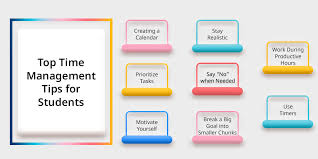
Managing time effectively is one of the most important skills a student can develop. In 2025, with online classes, part-time jobs, and extracurricular activities, students face more distractions than ever. Good time management not only improves academic performance but also reduces stress and increases productivity.
Set Clear Goals
Start by defining what you want to achieve each day, week, and month. Setting clear and realistic goals helps prioritize tasks and prevents wasted time on less important activities. Use tools like planners or digital apps to organize your objectives.
Prioritize Tasks with the Eisenhower Matrix
Not all tasks are equally important. The Eisenhower Matrix helps you categorize tasks into:
- Urgent & Important – Do these immediately.
- Important, Not Urgent – Schedule these for later.
- Urgent, Not Important – Delegate or limit time spent.
- Neither Urgent nor Important – Avoid or minimize.
This method ensures your energy is spent on tasks that truly matter.
Create a Daily Routine
Consistency is key to effective time management. Create a daily schedule including study time, breaks, meals, and sleep. A routine reduces procrastination and helps you develop discipline over time.
Use the Pomodoro Technique
Break study sessions into focused intervals of 25 minutes followed by a 5-minute break. After four sessions, take a longer break of 15–30 minutes. This technique improves concentration, prevents burnout, and keeps your mind fresh.
Avoid Multitasking
Multitasking often reduces efficiency and increases errors. Focus on one task at a time and complete it before moving to the next. Single-tasking ensures higher quality work in less time.
Minimize Distractions
Identify what distracts you most — social media, notifications, or noisy environments — and take steps to minimize them. Use apps like Forest or StayFocusd to stay disciplined while studying.
Use Time Management Tools
Digital tools can help you plan, track, and analyze how you spend your time:
- Trello: For task management and project tracking.
- Notion: Organizes notes, tasks, and schedules in one place.
- Google Calendar: Helps you set reminders and visualize your day.
Balance Work and Rest
Effective time management isn’t just about working more; it’s about balancing productivity with rest. Ensure adequate sleep, short breaks, and recreational activities to recharge your mind.
Review and Reflect
At the end of each week, review your progress. Identify tasks you completed, areas where you struggled, and improvements you can make. Reflection helps refine your time management strategies over time.
Conclusion
Time management is a skill that can transform a student’s life. By setting goals, prioritizing tasks, avoiding distractions, and maintaining a healthy balance, students can achieve more in less time.
Mastering these strategies in 2025 will not only improve academic performance but also prepare learners for professional life, where effective time management is a key to success.