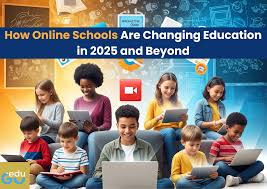
The education landscape has transformed more in the past few years than in the entire last century. In 2025, online learning continues to redefine how students, professionals, and lifelong learners acquire knowledge. From AI-powered virtual tutors to immersive digital classrooms, technology is making education more accessible, flexible, and personalized than ever before.
Accessibility Beyond Boundaries
One of the most significant impacts of online learning is global accessibility. In 2025, students from any corner of the world can enroll in top university courses without leaving their homes. Platforms like Coursera, edX, and Khan Academy have made quality education affordable, breaking the traditional barriers of geography and high tuition costs.
Personalized Learning with AI
Artificial Intelligence has revolutionized education by tailoring lessons according to individual learning patterns. Adaptive learning systems can now track a student’s strengths, weaknesses, and pace — customizing assignments, quizzes, and explanations to improve understanding. This personalization helps learners grasp complex topics faster and stay engaged longer.
The Rise of Skill-Based Learning
Instead of focusing solely on degrees, more people are now learning specific skills to enhance employability. Online platforms offer specialized certifications in digital marketing, data science, web development, and blockchain technology. Employers now value practical knowledge and hands-on experience more than traditional degrees, making skill-based online learning a key to career growth.
Interactive and Immersive Learning
With the integration of Virtual Reality (VR) and Augmented Reality (AR), online classes have become more engaging. Medical students can now practice surgeries in a virtual environment, while architecture students can walk through 3D models of their designs. This immersive approach makes theoretical learning more practical and memorable.
Collaboration Through Digital Classrooms
In 2025, online learning is no longer an isolated experience. Interactive platforms allow students to join live discussions, collaborate on projects, and get real-time feedback from instructors. These virtual communities foster teamwork, critical thinking, and creativity — essential skills for the modern world.
Affordable Education for All
Online courses are not just convenient; they’re cost-effective too. Learners can access high-quality resources at a fraction of the price of traditional education. Additionally, many organizations now sponsor online training for their employees, making continuous learning a part of workplace culture.
Future of Education: Blended Learning
The future of education lies in a hybrid model combining traditional and online methods. Schools and universities are integrating digital tools to supplement classroom teaching. This blended approach ensures that students get the best of both worlds — human interaction and technological innovation.
Conclusion
Online learning in 2025 is more than just a trend — it’s a complete reimagining of education. It empowers individuals to learn at their own pace, from anywhere, and about anything that sparks their interest. As technology continues to evolve, the line between formal education and self-learning will blur, creating an era where knowledge is truly limitless.