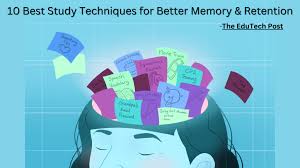
Learning new information is easy — remembering it for a long time is the real challenge. Whether you’re a student preparing for exams or a professional upgrading your skills, developing strong memory techniques can completely transform how effectively you learn. In 2025, neuroscience-backed strategies and modern tools make it easier than ever to improve memory retention.
Let’s explore the most powerful and practical study techniques that actually work.
The Power of Active Recall
Active recall is one of the most effective ways to strengthen your memory. Instead of passively rereading notes, try to recall the information without looking. This technique forces your brain to actively retrieve knowledge, improving long-term retention. For example, after studying a topic, close your notes and summarize it aloud or write it down from memory.
Spaced Repetition
Spaced repetition means reviewing material at increasing time intervals. Instead of cramming everything the night before an exam, you review lessons multiple times over several days. This approach strengthens neural connections and helps you remember facts for months or even years. Apps like Anki and Quizlet use this technique effectively.
The Pomodoro Technique
Studying for long hours without breaks often leads to burnout. The Pomodoro Technique helps maintain focus by dividing study time into 25-minute sessions followed by short breaks. After four sessions, take a longer 15–30-minute break. This method keeps your brain active and prevents fatigue.
Mind Mapping for Better Understanding
Mind maps are visual tools that connect ideas around a central topic. They help you see relationships between concepts, making complex subjects easier to understand. Drawing mind maps engages both sides of your brain — logic and creativity — improving comprehension and recall.
Teaching What You Learn
Teaching is one of the best ways to reinforce learning. When you explain a concept to someone else, your brain organizes and simplifies the information, ensuring a deeper understanding. Try explaining lessons to a friend, or even record yourself summarizing a topic aloud.
Use of Mnemonics
Mnemonics are memory aids that simplify difficult information through patterns, rhymes, or acronyms. For example, using “PEMDAS” to remember the order of operations in math (Parentheses, Exponents, Multiplication, Division, Addition, Subtraction). Mnemonics make memorization faster and more fun.
Study in Multiple Locations
Changing your study environment can improve focus and memory. When you study in different places, your brain forms varied associations with the material, helping you recall information more easily later. Try alternating between a desk, library, or quiet café.
Use All Your Senses
Engaging multiple senses during learning enhances memory retention. Read aloud, take notes by hand, watch related videos, or use flashcards. The more senses you involve, the stronger your memory connections become.
Sleep and Nutrition Matter
Memory doesn’t just depend on study time — it’s also affected by rest and diet. Sleep helps your brain consolidate information, while a balanced diet rich in omega-3s, fruits, and vegetables keeps your mind sharp. Avoid caffeine overload and ensure at least 7–8 hours of sleep daily.
Review Before Bed
A simple but effective trick: revise key points before sleeping. During sleep, your brain processes and stores new information. Reviewing before bed strengthens those neural connections, improving recall the next day.
The Role of Technology in Studying
In 2025, study apps and AI-based learning tools have made memory training more accessible. Tools like Notion, Evernote, and Grammarly help students organize notes, summarize topics, and practice writing efficiently. AI-powered flashcards and personalized study planners are becoming essential for modern learners.
Conclusion
Improving memory retention isn’t about studying harder — it’s about studying smarter. Techniques like active recall, spaced repetition, and mind mapping help you retain knowledge effectively and confidently. By combining these methods with healthy habits and smart tools, you can enhance your learning performance and remember information for life.
The key is consistency. When used regularly, these techniques turn learning into an enjoyable, lasting experience.